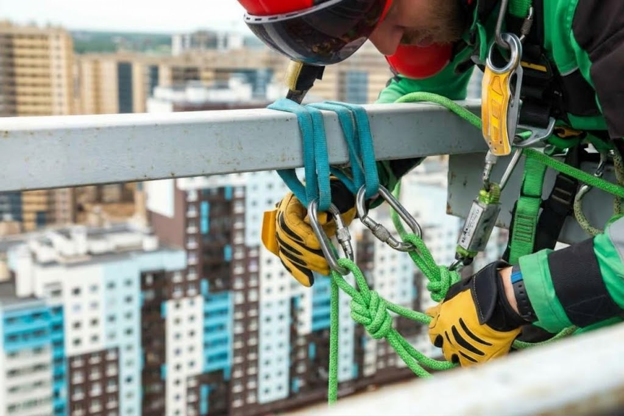

When comparing quotations for safety at height services, cost will naturally influence the decision. However, work at height is an area where the lowest initial figure does not necessarily represent the best overall value. Different quotations can appear to cover the same physical task while allowing for very different levels of planning, supervision, equipment and rescue provision.

That distinction matters because falls from height remain the most common cause of fatal workplace injuries in Great Britain. HSE reported 31 worker fatalities caused by falls from height in 2025/26, representing around a quarter of all worker deaths that year. Construction also remained the industry with the highest number of worker fatalities overall.
What Are You Paying For?
Good work at height safety begins before the technicians arrive on site. The Work at Height Regulations require activities to be properly planned and organised, with competent people and appropriate equipment used for the work. The risk assessment also needs to take account of the actual task and conditions, rather than assuming that an access method used successfully elsewhere will automatically suit the next project.
For this reason, safety at height services can involve considerably more than the visible work on site. A competent contractor may need to carry out an initial assessment, develop site-specific RAMS, determine the most suitable access method, review anchorage requirements and establish controlled working areas. Equipment also needs to be suitable and appropriately inspected, while the people completing the work must have the necessary training, skills and supervision.
When comparing quotations, it is worth establishing whether each scope provides for:
- Site-specific risk assessment and method planning
- Suitable work-at-height equipment and inspection
- Competent technicians and supervision
- Appropriate exclusion or controlled working areas
- Emergency and rescue arrangements
A lower price is not necessarily evidence that any of these elements are missing. Equally, a higher price does not automatically demonstrate better standards. Asking what has actually been allowed for is what makes a meaningful comparison possible.
How The Access Method Affects Cost
Different access methods carry different mobilisation and operating requirements. Scaffolding may be suitable where teams need prolonged access to a large working area, while a MEWP can provide an efficient solution where space and ground conditions allow it. Industrial rope access may be particularly effective in areas where traditional systems would require significant setup or create unnecessary disruption.
This means working at height costs should be considered across the whole project rather than reduced to an hourly or daily rate. A system with a lower labour rate may require substantially more installation time, while an alternative that appears more expensive per technician could require less equipment and create fewer restrictions on normal site activity.
The correct decision depends on what the work requires. HSE’s hierarchy also means the access method must be selected according to the assessed risk, with collective protection considered before personal protection where reasonably practicable.
Why Rescue Planning Matters
Emergency and rescue arrangements can be another important difference between quotations. A fall-protection system is not complete simply because it can stop a person falling or arrest a fall once it occurs. The project must also consider how somebody would be recovered following a foreseeable incident.
HSE confirms that emergency and rescue procedures must be planned for work at height and should not simply rely on the fire and rescue service. Depending on the access method, this can require additional equipment, trained personnel and a rescue approach suited specifically to the working area. These provisions require time and resources, but they form part of completing the work responsibly.
Why Cheap Work Can Become Expensive Work
The initial quotation is only one part of the cost of a project. Poor planning can result in access equipment being changed after mobilisation, work being stopped while documentation is corrected, or activities conflicting with operational areas that were not considered beforehand. These issues can extend the programme and create disruption that costs significantly more than the savings made at the procurement stage.
Good safety planning supports predictable delivery. When the site, task and access requirements have been assessed properly, everyone involved has a clearer understanding of how the work will proceed and what controls need to remain in place.
That is why well-planned safety at height services should be assessed on the complete scope and the level of control they provide, rather than price alone. Value comes from delivering the required work safely and efficiently without creating avoidable risk or disruption elsewhere on the site.
Work With Us
If you are comparing options for work at height, speak to us about an approach suited to your site and requirements. We deliver specialist access with safety and compliance at the centre of every project, helping clients understand the work involved before mobilisation.

Image Source: Envato
Working At Height Regulations 2005: A Practical Guide For Duty Holders
Roof Man Safe Systems: New-Build Vs Refurbishment