---
title: "Working at Height Solutions: How to Choose the Right One"
description: Discover working at height solutions, safety solutions, and work at height access tips to help you choose the right option for your site.
image: https://www.adssltd.com/hubfs/How-Do-You-Choose-The-Right-Working-At-Height-Solution-For-Your-Site-1.jpg
---
[01889 500249](tel:01889500249) [info@adssltd.com](mailto:info@adssltd.com)
[01889 500249](tel:01889500249) [info@adssltd.com](mailto:info@adssltd.com)
[](https://www.adssltd.com/)
[](https://www.adssltd.com/)
- [Home](https://www.adssltd.com)
- Specialist Access
- [Specialist Access](https://www.adssltd.com/specialist-access-services)
- [Rope Access](https://www.adssltd.com/rope-access)
- [Confined Spaces](https://www.adssltd.com/confined-space-rescue)
- [Safety Netting](https://www.adssltd.com/rope-access-safety-netting)
- [Working At Height](https://www.adssltd.com/working-at-height)
- [Man Safe System](https://www.adssltd.com/man-safe-system)
- [Rope Access Explained Guide](https://www.adssltd.com/rope-access-explained-is-it-right-for-your-project)
- [EV Charging Infrastructure Projects Guide](https://www.adssltd.com/thank-you-ev-infrastructure)
- Civil Engineering
- [Civil Engineering](https://www.adssltd.com/civil-engineering-services)
- [Groundwork](https://www.adssltd.com/civil-groundworks)
- [Utility Services](https://www.adssltd.com/utility-services)
- [Water](https://www.adssltd.com/water-infrastructure)
- [Minor Infrastructure](https://www.adssltd.com/minor-works)
- [Building Refurbishment & Infrastructure](https://www.adssltd.com/building-refurbishment)
- [Power Generation](https://www.adssltd.com/power-infrastructure)
- [EV Infrastructure](https://www.adssltd.com/electric-car-charging-infrastructure)
- [About Us](https://www.adssltd.com/rope-access-company)
- Resources
- [Blog](https://www.adssltd.com/adss-ltd-blog)
- [Contact Us](https://www.adssltd.com/contact-us)
- [Rope Access Explained Guide](https://www.adssltd.com/rope-access-explained-is-it-right-for-your-project)
- [EV Charging Infrastructure Projects Guide](https://www.adssltd.com/ev-charging-infrastructure-guide-civil-works)
- [Complete Guide to Rope Access Safety](https://www.adssltd.com/rope-access-safety-guide-work-at-height-regulations-2005)
More results
[Contact Us](https://www.adssltd.com/contact-us)
[Contact Us](https://www.adssltd.com/contact-us)
[Contact Us](https://www.adssltd.com/contact-us)
- [Home](https://www.adssltd.com)
- Specialist Access
- [Specialist Access](https://www.adssltd.com/specialist-access-services)
- [Rope Access](https://www.adssltd.com/rope-access)
- [Confined Spaces](https://www.adssltd.com/confined-space-rescue)
- [Safety Netting](https://www.adssltd.com/rope-access-safety-netting)
- [Working At Height](https://www.adssltd.com/working-at-height)
- [Man Safe System](https://www.adssltd.com/man-safe-system)
- [Rope Access Explained Guide](https://www.adssltd.com/rope-access-explained-is-it-right-for-your-project)
- [EV Charging Infrastructure Projects Guide](https://www.adssltd.com/thank-you-ev-infrastructure)
- Civil Engineering
- [Civil Engineering](https://www.adssltd.com/civil-engineering-services)
- [Groundwork](https://www.adssltd.com/civil-groundworks)
- [Utility Services](https://www.adssltd.com/utility-services)
- [Water](https://www.adssltd.com/water-infrastructure)
- [Minor Infrastructure](https://www.adssltd.com/minor-works)
- [Building Refurbishment & Infrastructure](https://www.adssltd.com/building-refurbishment)
- [Power Generation](https://www.adssltd.com/power-infrastructure)
- [EV Infrastructure](https://www.adssltd.com/electric-car-charging-infrastructure)
- [About Us](https://www.adssltd.com/rope-access-company)
- Resources
- [Blog](https://www.adssltd.com/adss-ltd-blog)
- [Contact Us](https://www.adssltd.com/contact-us)
- [Rope Access Explained Guide](https://www.adssltd.com/rope-access-explained-is-it-right-for-your-project)
- [EV Charging Infrastructure Projects Guide](https://www.adssltd.com/ev-charging-infrastructure-guide-civil-works)
- [Complete Guide to Rope Access Safety](https://www.adssltd.com/rope-access-safety-guide-work-at-height-regulations-2005)
[Contact Us](https://www.adssltd.com/contact-us)
[01889 500249](tel:01889500249) [info@adssltd.com](mailto:info@adssltd.com)
[Working at Height](https://www.adssltd.com/adss-ltd-blog/tag/working-at-height)
# How Do You Choose The Right Working At Height Solution For Your Site?
by [ADSS](https://www.adssltd.com/adss-ltd-blog/author/adss)
3 min read
May 7, 2026, 12:00:00 PM
For facilities managers, navigating the complexities of building maintenance requires a clear and compliant approach to safety and operational delivery. Selecting appropriate working at height solutions is not just a matter of convenience but a critical legal and operational responsibility. Every site presents unique challenges, from tight urban footpaths to fragile roof structures. Making the wrong choice can lead to project delays, increased costs or, in the worst-case scenario, serious accidents that carry heavy legal consequences.
## **[](https://www.adssltd.com/hs/cta/wi/redirect?encryptedPayload=AVxigLIo1nI9xNxX4OE0%2Bs3r5EH%2F9x1IgT5N3BhAn3H%2Bg%2Bs1LZ5iXFFlDWJm%2Bcpf0as2xz3Iru71Iw6qsV9rYZ3KjAIONSHFI13hWvmiku2IWmWsn7MSuiyX6Pqqd7zRQYxxJ1m%2F%2BBwTC75VysCnjXweedi2ZmGLY5xcPvEse0KgyfzA8lblhWTpUhGYvQWq8gOdyg%3D%3D&webInteractiveContentId=266760376567&portalId=146688385) Start With A Site-Specific Risk Assessment**
The foundation of any successful project is a comprehensive risk assessment. In line with the Work at Height Regulations 2005, you must follow the hierarchy of control. This means your first priority should always be to avoid working at height altogether if the task can be completed from the ground. When that is not possible, the focus shifts to preventing falls through the implementation of collective protective measures.
A thorough assessment considers the specific hazards present on your site. This includes overhead power lines, fragile surfaces and the stability of the ground. By identifying these [risks](https://www.adssltd.com/adss-ltd-blog/reduce-risk-while-working-at-height) early, you can determine which [working at height](https://www.adssltd.com/working-at-height) safety solutions will provide the highest level of protection for your contractors. This process ensures that safety is designed into the project from the outset rather than being an afterthought.
## **Matching The Method To The Task**
The nature of the work often dictates the most appropriate work at height access. You must evaluate the type, duration and frequency of the task. For example, a quick visual inspection of a lighting fixture requires a different approach than a month-long project to replace cladding or windows.
1. **Short-Duration Tasks:** For jobs that take minutes rather than hours, mobile elevating work platforms (MEWPs) or industrial rope access might be the most efficient options.
2. **Long-term Projects:** If a large team needs to work in one area for several weeks, traditional scaffolding might offer a more stable and cost-effective work at height access over time.
3. **Repetitive Maintenance:** For buildings that require frequent gutter cleaning or plant maintenance, installing permanent lifelines or guardrails provides a reliable and ready-to-use option.
Selecting a method that matches the task prevents over-engineering, which can save your budget without compromising the safety of the personnel involved.
## **Considering Site Constraints And Operational Disruption**
As a facilities manager, you must keep the building operational. Large-scale scaffolding can block fire exits, obscure signage, and take up valuable parking space. In these instances, you should look for working at height solutions that minimise the physical footprint on the ground. Rope access or compact spider lifts can often reach difficult areas without requiring the total closure of pedestrian walkways or delivery bays.
The time it takes to set up and dismantle equipment also impacts your site operations. A solution that can be deployed and removed within a single shift is often preferable for retail or office environments. By choosing a method that controls risk while respecting site constraints, you ensure that maintenance work does not become a major obstacle for the building’s tenants or visitors.
## **The Importance Of Competence And Compliance**
Selecting the equipment is only half of the challenge. In addition, you also need to ensure that those operating it are fully qualified. Using [working at height](https://www.adssltd.com/working-at-height) safety solutions effectively requires specific technical skills and safety training. Every [contractor](https://www.adssltd.com/adss-ltd-blog/bs-86812024-specialist-contractors-adapting-ensure-compliance) on your site should be able to provide proof of their competence, such as IRATA certification for rope access or IPAF licenses for mobile platforms.
Compliance also extends to the equipment itself. All safety assets must be supported by appropriate documentation and certification. This includes current LOLER (Lifting Operations and Lifting Equipment Regulations) reports and maintenance logs. As a duty holder, you are responsible for ensuring that all equipment brought onto your site is fit for purpose and has been recently inspected by a competent person.
## **Ongoing Maintenance And Documentation**
Safety does not end once the initial work at height access has been established. If you have permanent safety systems installed, such as horizontal lifelines or anchor points, they require ongoing maintenance and annual recertification. Neglecting these schedules can render your insurance invalid and leave your staff at risk.
Keeping a robust digital or physical log of all work at height activity is essential for long-term facility management. This documentation provides a clear audit trail, proving that you have met your statutory obligations under UK law. It also helps you identify patterns in building wear and tear, allowing you to plan future working at height solutions more effectively.
## **Finding The Right Partner**
Choosing between scaffolding, cradles, or rope access requires careful evaluation due to the range of available access methods. However, partnering with a specialist access provider like ADSS can simplify this decision. Our professional team will help you evaluate your site-specific needs and recommend the most efficient and compliant path forward.
Investing in high-quality working at height safety solutions is an investment in the longevity of your building and the safety of everyone who works there. By prioritising clear communication and rigorous standards, you can manage complex work at height tasks in a controlled and compliant manner.
Need help choosing a compliant working at height solution? [Contact us](https://www.adssltd.com/contact-us) to discuss the most appropriate approach for your site.
[](https://www.adssltd.com/hs/cta/wi/redirect?encryptedPayload=AVxigLLwBdWLa5wJP6WQy%2F934qQLrMumAcM1SOQTsx53EbvlM4xf9suqYbK4zHrRy3Uioh07n3Evd1WcfVdPpliwwjWBO%2FKphqhfvM3YPg7wgqPh4uyzii0v6N%2BTO9xPTXgyUkAH9gg5OQIBXGuibNcBwxqs6azELvB0Cabe9sKuuJgpY8yCJRVRhFvQtA%3D%3D&webInteractiveContentId=337804397813&portalId=146688385)
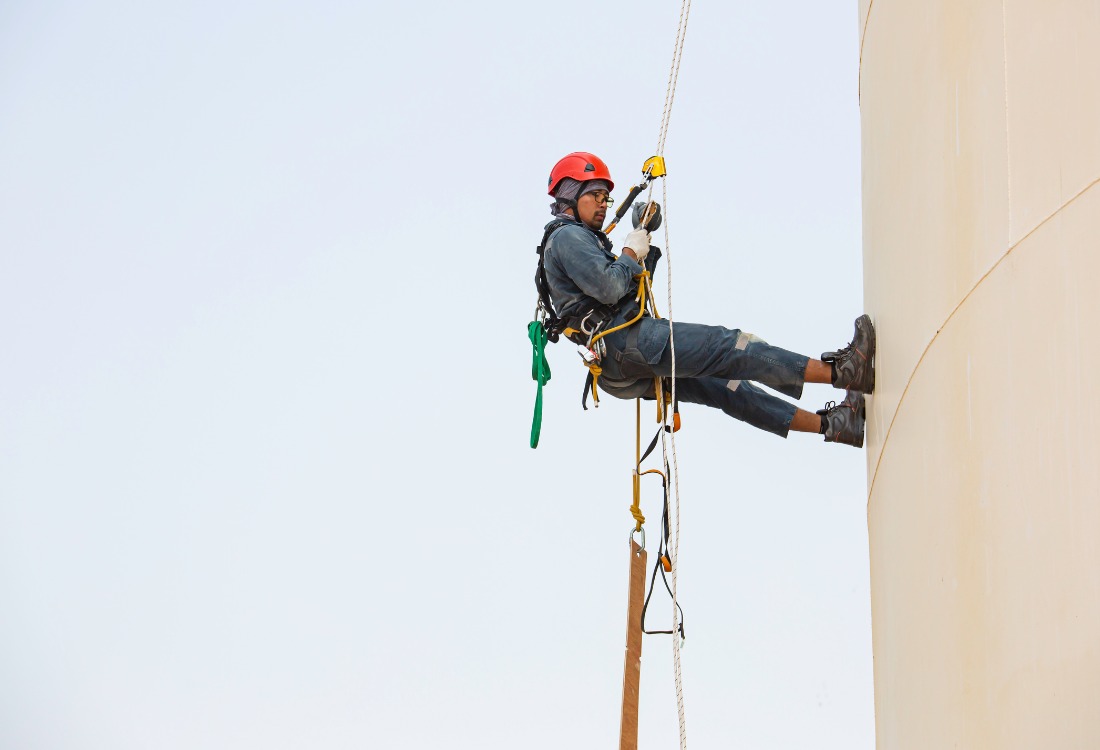
Image Source: [Envato](https://app.envato.com/photos/5bd0b511-e028-4782-b2f0-db81b3c49a08)
- Recent
- Topics
- Archive
Recent
Topics
- [Working at Height (5)](https://www.adssltd.com/adss-ltd-blog/tag/working-at-height)
- [Civil Groundworks (4)](https://www.adssltd.com/adss-ltd-blog/tag/civil-groundworks)
- [electric car charging infrastructure (3)](https://www.adssltd.com/adss-ltd-blog/tag/electric-car-charging-infrastructure)
- [Man Safe System (2)](https://www.adssltd.com/adss-ltd-blog/tag/man-safe-system)
- [Rope Access (2)](https://www.adssltd.com/adss-ltd-blog/tag/rope-access)
- [Confined Space Access (1)](https://www.adssltd.com/adss-ltd-blog/tag/confined-space-access)
- [specialist access (1)](https://www.adssltd.com/adss-ltd-blog/tag/specialist-access)
See all
Archive
- [July 2026 (3)](https://www.adssltd.com/adss-ltd-blog/archive/2026/07)
- [June 2026 (5)](https://www.adssltd.com/adss-ltd-blog/archive/2026/06)
- [May 2026 (2)](https://www.adssltd.com/adss-ltd-blog/archive/2026/05)
- [April 2026 (2)](https://www.adssltd.com/adss-ltd-blog/archive/2026/04)
- [March 2026 (1)](https://www.adssltd.com/adss-ltd-blog/archive/2026/03)
- [February 2026 (1)](https://www.adssltd.com/adss-ltd-blog/archive/2026/02)
- [January 2026 (2)](https://www.adssltd.com/adss-ltd-blog/archive/2026/01)
- [December 2025 (2)](https://www.adssltd.com/adss-ltd-blog/archive/2025/12)
See all
### Subscribe by email
Share this
[Share on X](https://x.com/intent/post?url=https://www.adssltd.com/adss-ltd-blog/how-choose-right-working-height-solution&text=Working+at+Height+Solutions%3A+How+to+Choose+the+Right+One) [Share on Facebook](https://www.facebook.com/sharer/sharer.php?u=https://www.adssltd.com/adss-ltd-blog/how-choose-right-working-height-solution&t=Working+at+Height+Solutions%3A+How+to+Choose+the+Right+One) [Share on LinkedIn](https://www.linkedin.com/shareArticle?mini=true&url=https://www.adssltd.com/adss-ltd-blog/how-choose-right-working-height-solution&t=Working+at+Height+Solutions%3A+How+to+Choose+the+Right+One)
Previous story
[← How Often Should A Man Safe System Be Inspected And Certified In The UK?](https://www.adssltd.com/adss-ltd-blog/man-safe-system-inspection-and-certification)
Next story
[What Is Confined Space Rescue, And When Is It Required In The UK? →](https://www.adssltd.com/adss-ltd-blog/confined-space-rescue-when-required-uk)
## You May Also Like
These Related Stories
[How To Reduce Risk While Working At Height](https://www.adssltd.com/adss-ltd-blog/reduce-risk-while-working-at-height)
[Working at Height](https://www.adssltd.com/adss-ltd-blog/tag/working-at-height)
### How To Reduce Risk While Working At Height
Dec 10, 2025, 10:00:00 AM 4 min read
[Working At Height Regulations 2005: A Practical Guide For Duty Holders](https://www.adssltd.com/adss-ltd-blog/working-at-height-regulations-guide)
[Working at Height](https://www.adssltd.com/adss-ltd-blog/tag/working-at-height)
### Working At Height Regulations 2005: A Practical Guide For Duty Holders
Jun 25, 2026, 11:00:01 AM 3 min read
[Why Risk Assessments Alone Don’t Prevent Working At Height Incidents?](https://www.adssltd.com/adss-ltd-blog/work-at-height-incidents-risk-assessments)
[Working at Height](https://www.adssltd.com/adss-ltd-blog/tag/working-at-height)
### Why Risk Assessments Alone Don’t Prevent Working At Height Incidents?
Jun 26, 2026, 11:00:00 AM 4 min read
### Get Email Notifications
[tel:01889500249](tel:01889500249) [mailto:info@adssltd.com](mailto:info@adssltd.com)
[Specialist Access](https://www.adssltd.com/specialist-access-services)
- [Rope Access](https://www.adssltd.com/rope-access)
- [Confined Spaces](https://www.adssltd.com/confined-space-rescue)
- [Safety Netting](https://www.adssltd.com/rope-access-safety-netting)
- [Working At Height](https://www.adssltd.com/working-at-height)
- [Man Safe System](https://www.adssltd.com/man-safe-system)
[Civil Engineering](https://www.adssltd.com/civil-engineering-services)
- [Groundwork](https://www.adssltd.com/civil-groundworks)
- [Utility Services](https://www.adssltd.com/utility-services)
- [Water](https://www.adssltd.com/water-infrastructure)
- [Minor Infrastructure](https://www.adssltd.com/minor-works)
- [Building Refurbishment](https://www.adssltd.com/building-refurbishment)
- [Power Generation](https://www.adssltd.com/power-infrastructure)
- [EV Infrastructure](https://www.adssltd.com/electric-car-charging-infrastructure)
Resources
- [About Us](https://www.adssltd.com/rope-access-company)
- [Blog](https://www.adssltd.com/adss-ltd-blog)
- [Contact Us](https://www.adssltd.com/contact-us)
- [Request A Quote](https://www.adssltd.com/request-a-quote)
- [Request A Site Visit](https://www.adssltd.com/request-a-site-survey)
Copyright © 2026 ADSS Ltd
VAT: 679039102 | Company Number: 3879336
- [Terms](https://www.adssltd.com/terms-conditions)
- [Privacy](https://www.adssltd.com/privacy-policy)
- [Cookies](https://www.adssltd.com/cookie-policy)

```json
{
"@context" : "https://schema.org",
"@type" : "BlogPosting",
"author" : {
"@type" : "Person",
"name" : "ADSS",
"url" : "https://www.adssltd.com/adss-ltd-blog/author/adss"
},
"dateModified" : "2026-05-13T13:32:44.465Z",
"datePublished" : "2026-05-07T11:00:00.000Z",
"headline" : "Working at Height Solutions: How to Choose the Right One",
"image" : [ "https://www.adssltd.com/hubfs/How-Do-You-Choose-The-Right-Working-At-Height-Solution-For-Your-Site-1.jpg" ],
"mainEntityOfPage" : {
"@id" : "https://www.adssltd.com/adss-ltd-blog/how-choose-right-working-height-solution",
"@type" : "WebPage"
},
"publisher" : {
"@type" : "Organization",
"logo" : {
"@type" : "ImageObject",
"url" : "https://www.adssltd.com/hubfs/adss-logo-clear-bg-1.png"
}
}
}
```
```json
{
"@context" : "https://schema.org",
"@type" : "LocalBusiness",
"address" : {
"@type" : "PostalAddress",
"addressCountry" : "UK",
"addressLocality" : "Uttoxeter",
"addressRegion" : "Staffordshire",
"postalCode" : "ST14 8QS",
"streetAddress" : "Unit 1A, Kingstone Business Park, Potts Lane, Kingstone"
},
"alternateName" : "Access Direct Site Services",
"contactPoint" : {
"@type" : "ContactPoint",
"areaServed" : "GB",
"availableLanguage" : "en",
"contactType" : "customer service",
"telephone" : "+44 1889 500249"
},
"geo" : {
"@type" : "GeoCoordinates",
"latitude" : 52.8807,
"longitude" : -1.9533
},
"image" : "https://www.adssltd.com/hs-fs/hubfs/ADSS%20Images.webp",
"logo" : "https://www.adssltd.com/hs-fs/hubfs/adss-logo-clear-bg.png",
"name" : "ADSS Ltd",
"openingHours" : [ "Mo 09:00-17:30", "Tu 09:00-17:30", "We 09:00-17:30", "Th 09:00-17:30", "Fr 09:00-17:30", "Sa Closed", "Su Closed" ],
"priceRange" : "£",
"sameAs" : [ "https://www.facebook.com/AccessDirectltd/" ],
"telephone" : "01889 223818",
"url" : "https://www.adssltd.com/"
}
```
```json
{
"@context" : "https://schema.org",
"@type" : "WebPage",
"description" : "Discover working at height solutions, safety solutions, and work at height access tips to help you choose the right option for your site.",
"inLanguage" : "en-GB",
"name" : "Working at Height Solutions: How to Choose the Right One",
"publisher" : {
"@type" : "Organization",
"logo" : {
"@type" : "ImageObject",
"url" : "https://www.adssltd.com/hs-fs/hubfs/adss-logo-clear-bg.png"
},
"name" : "ADSS Ltd",
"url" : "https://www.adssltd.com/"
},
"url" : "https://www.adssltd.com/adss-ltd-blog/how-choose-right-working-height-solution"
}
```
```json
{
"@context" : "https://schema.org",
"@type" : "BreadcrumbList",
"itemListElement" : [ {
"@type" : "ListItem",
"item" : "https://www.adssltd.com/",
"name" : "Home",
"position" : 1
}, {
"@type" : "ListItem",
"item" : "https://www.adssltd.com/adss-ltd-blog/how-choose-right-working-height-solution",
"name" : "How Do You Choose The Right Working At Height Solution For Your Site?",
"position" : 2
} ]
}
```